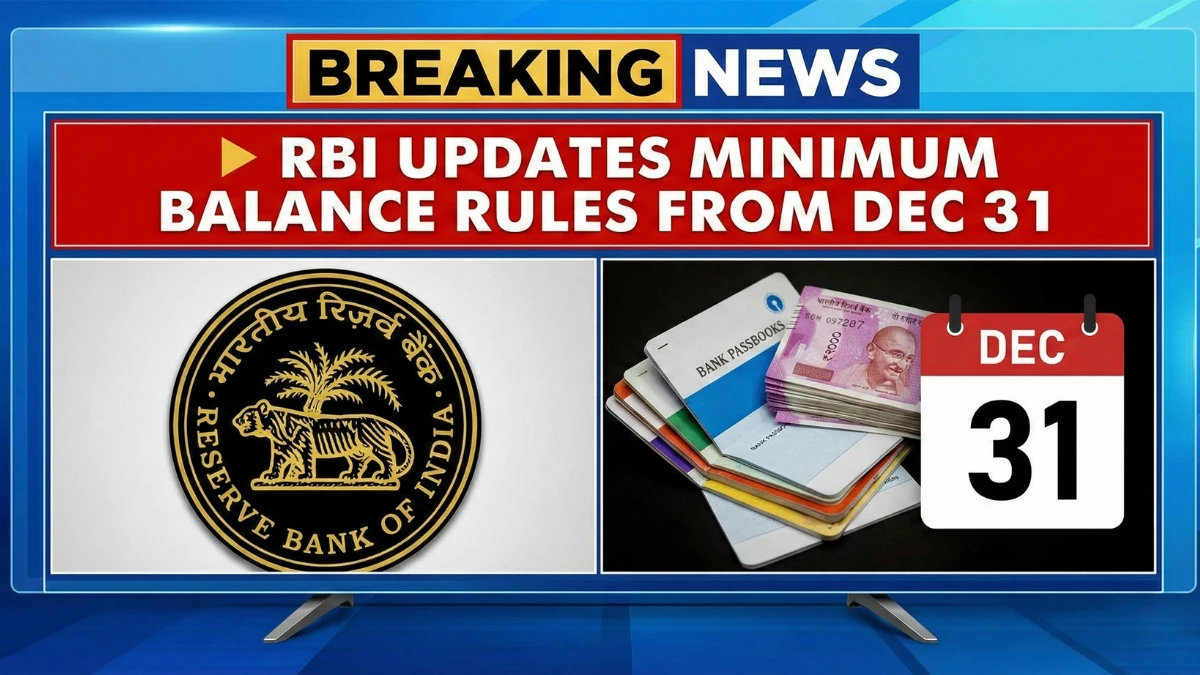
The Reserve Bank of India has introduced new minimum balance rules for bank accounts, set to take effect from December 31, aiming to bring more transparency, uniformity, and customer protection across the banking system.
What the New RBI Minimum Balance Rules Mean
Under the updated guidelines, banks will be required to clearly define minimum balance requirements and related penalties, ensuring that customers are fully informed and not subjected to arbitrary or hidden charges.
Key Details of RBI Minimum Balance Rules
| Category | Details |
|---|---|
| Issuing Authority | Reserve Bank of India (RBI) |
| Effective Date | December 31 |
| Accounts Covered | Savings Bank Accounts |
| Rule Objective | Transparency and Customer Protection |
| Penalty Guidelines | Mandatory disclosure by banks |
What Account Holders Should Keep in Mind
- Banks must clearly communicate minimum balance limits
- Penalties cannot be unclear or misleading
- Customers should check bank notifications regularly
- Charges must align with RBI guidelines
Impact on Bank Customers
These rules are expected to reduce confusion among account holders, prevent unfair penalties, and encourage banks to adopt customer-friendly practices while maintaining operational discipline.
Steps Banks Must Take
Banks are required to update their policy documents, notify customers in advance, and ensure compliance with the RBI’s directions before the rules come into force.
How This Improves Banking Transparency
By standardizing disclosure norms, the RBI aims to strengthen trust between banks and customers, making banking services more predictable and fair.
Conclusion
The new RBI minimum balance rules effective December 31 mark an important step toward protecting bank customers, improving transparency, and ensuring fair banking practices across India.
Disclaimer
This article is based on regulatory information available at the time of writing; customers are advised to refer to official bank notifications or RBI circulars for exact terms and conditions.